Latvia · Dish
Aukstā zupa: Latvian cold beetroot soup
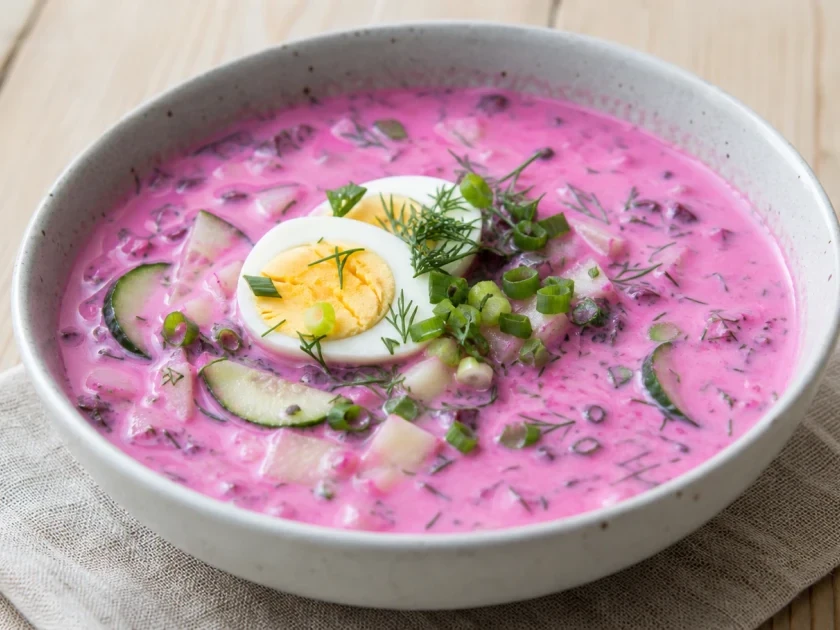
Aukstā zupa is Latvia’s bright pink summer soup, made with beetroot and a chilled kefir or buttermilk base. Cucumber, egg, potato, dill and spring onion are common additions, although every household has its own version.
- Dish type
- Chilled soup
- What to expect
- Cold, tangy and mildly earthy
- Season
- Summer
- Pronunciation
- Approximately “OWK-stah ZOO-pah”
This guide is independently written and checked against official Latvian government cultural information.
Aukstā zupa
Latvian cold beet soup
A chilled Latvian summer soup made with kefir, beetroot, cucumber, herbs and boiled egg.
- Preparation
- 20 min
- Egg cooking
- 10 min
- Total
- 1 hr 30 min
- Yield
- 6 servings
- Energy / serving
- Approx. 250 kcal
Timing note: The 10-minute cooking time covers the eggs only and assumes the beetroot is already cooked and cooled, or comes pickled from a jar. If starting with fresh beetroot, allow about 45 to 60 minutes to cook it until tender, then cool and peel it before preparing the soup.
Estimated energy is calculated from the listed quantities and stated yield. Actual values vary with brands, optional ingredients, serving size and absorbed frying fat.
Ingredients
Use the plus buttons to build your shopping list, then open My recipes to review it.
- 1.5 litres plain kefir
- 500 g cooked, cooled and peeled beetroot, grated or cut into thin strips, or pickled beetroot from a jar for the quick option
- 2 to 4 tablespoons beetroot pickling liquid, as needed
- 1 large cucumber, diced or cut into thin strips
- 4 radishes, thinly sliced (optional)
- 4 spring onions, finely sliced
- 1 small bunch fresh dill, chopped
- 1 teaspoon prepared mustard (optional)
- Salt and freshly ground black pepper, to taste
- 50 to 150 ml cold mineral water, only if needed
- 4 hard-boiled eggs, halved or quartered
- Hot boiled potatoes, for serving (optional)
Method
-
Cook the eggs
Boil the eggs until firm, cool them in cold water and peel them.
-
Prepare the vegetables
If using fresh beetroot, cook it until tender, cool it completely and peel it before grating or slicing. For the quick option, use pickled beetroot from a jar. Do not use raw beetroot. Cut the cucumber, optional radishes, spring onions and dill.
-
Mix the soup
Combine the kefir, beetroot, a little beetroot liquid, cucumber, spring onions, dill and optional mustard. Season with salt and black pepper.
-
Adjust the consistency
Add cold mineral water a little at a time only if the soup is thicker than desired.
-
Chill
Cover and refrigerate for at least 1 hour so the soup becomes thoroughly cold and the flavours combine.
-
Serve
Serve very cold with the boiled eggs and extra dill. Offer hot boiled potatoes separately if desired.
Storage
Keep refrigerated and use within 2 days. Stir before serving. Do not freeze.
Allergens
Milk, Egg, Mustard if used
For eating out in Latvia, see Restaurant and allergy phrases.
Latvian and Lithuanian cold beet soups
What is the main difference between Latvian aukstā zupa and Lithuanian šaltibarščiai?
Latvian Aukstā zupa and Lithuanian Šaltibarščiai are close cousins rather than completely different dishes. Both are cold, pink summer soups made with beetroot and a dairy base such as kefir or buttermilk.
The Lithuanian version is more strongly associated with a fixed combination of kefir, beetroot, cucumber, dill, boiled egg and hot boiled potatoes served on the side. Latvian aukstā zupa is often more flexible. It may include radish, mustard, a sharper vinegar note, beetroot pickling liquid or other household variations.
What does “Aukstā zupa” mean?
“Aukstā zupa” translates literally from Latvian as “cold soup.”
aukstā = cold
zupa = soup
In practice, when used as a dish name, it usually refers specifically to the Latvian cold beetroot soup, similar to Lithuanian šaltibarščiai.
What it tastes like
The flavour is cool, tangy and mildly earthy rather than sweet. Cucumber and herbs add freshness, while egg and potato make the soup more filling. Mustard or vinegar may give some versions a sharper finish.
What the different versions share is their beetroot colour, chilled serving temperature and tangy dairy base.
What goes into it
The best-known Latvian version combines beetroot with kefir, buttermilk or another fermented dairy product and is served fully chilled. Fresh cucumber, boiled egg, potato, dill and spring onion are common additions.
The amount and presentation of the potato and egg vary between recipes. Some versions also include sausage or another meat product.
Why recipes vary so much
Official tourism material explicitly notes that families maintain their own versions and even differ over mustard and vinegar. The balance can range from mild and creamy to sharper and more acidic.
There is no single recipe used by every household or restaurant. Meat may be present or absent, and the balance of dairy, beetroot and seasoning changes from one version to another.
When and where to try it
Cold beetroot soup is closely associated with summer, but there is no fixed date when restaurants begin serving it and availability varies between restaurants and seasons.
In summer, it may appear on café, lunch-restaurant and traditional Latvian menus. Its vivid pink colour makes it easy to recognise even when the menu description is brief.
Dietary and ordering notes
Traditional versions contain dairy and usually egg. Some recipes also include sausage, mustard or other ingredients, so ask before ordering if you have allergies or follow a vegetarian diet.
Ask whether it contains dairy, egg or meat before ordering. The short Latvian name alone does not describe every ingredient in the kitchen’s version.
How to say aukstā zupa
An approximate English pronunciation is “OWK-stah ZOO-pah”. This is a practical pronunciation aid rather than a formal phonetic transcription.
The name translates directly as “cold soup”.
Questions cooks often ask
Can I use fresh beetroot for aukstā zupa?
Yes, but cook the beetroot until tender, allow it to cool completely, and peel it before grating or slicing. Allow about 45 to 60 minutes for cooking plus cooling time. Do not put raw beetroot into the soup.
Can I make aukstā zupa ahead of time?
Yes. The soup benefits from at least 1 hour in the refrigerator and can be prepared a day ahead. Keep it covered, stir before serving, and add the egg portions when serving if you want them to look neat.
How do I fix aukstā zupa that is too thick or too sharp?
For a soup that is too thick, stir in cold mineral water a little at a time. If it tastes too sharp, add more kefir rather than more beetroot pickling liquid, then adjust the salt and pepper after chilling.
Check the primary information
Sources and editorial checking
This guide was last reviewed on 5 August 2026. The source below provides official cultural background on Latvia’s wider food traditions.
Ministry of Foreign Affairs: Latvian cuisine
Official cultural overview of Latvian staples, celebrations, smoked-pork pastries and dairy traditions.
Continue planning
Related Latvia guides
Keep cooking
More Latvian recipes to try
Continue with another tested recipe from the LatviaLinks kitchen collection.


