Plan Your Trip · Seasons
Best time to visit Latvia: a month-by-month guide
For a first trip that combines Riga with regional travel, the most flexible periods are late May to mid-June and September. July and August give the best chance of beach weather, while January and February offer the best chance of snow without guaranteeing it.
The table below uses Latvia’s official 1991-2020 climate normals. These are long-term averages, not a forecast for a particular week. Daylight figures are approximate day lengths for Riga, rounded to five minutes; the east and west of Latvia differ slightly.
- Best all-round
- Late May, early June and September
- Beaches and swimming
- July to late August
- Longest daylight
- June · almost 18 hours in Riga
- Autumn colour window
- Late September to mid-October · variable
- Best snow chance
- January to February · never guaranteed
This guide is independently written and checked against official Latvian climate, health, holiday, road and attraction sources.
Recheck your actual dates
Climate normals describe a typical month, not your travel week. Confirm the forecast, event dates, bathing notices, transport and attraction hours before departure.
The short answer
Choose May, early June or September when you want a balanced trip with useful daylight, open regional attractions and less pressure than the main summer holiday period. Choose July or August when swimming and beach time are central. Choose December for a short Riga culture trip rather than for dependable snow.
Best all-round balance
Late May to mid-June, then September.
Best for beaches
July and August, while checking the actual water temperature and bathing-water notice.
Best for the longest days
June, with close to 18 hours of daylight in Riga near the solstice.
Best chance of winter conditions
January and February, although thaw, rain and limited snow remain possible.
Sources: Latvian Environment, Geology and Meteorology Centre: monthly climate characterisations , Health Inspectorate: official bathing-water quality , Health Inspectorate: water and air temperature
Latvia month by month
Temperature figures are national average daily minimum and maximum values. Precipitation shows the normal monthly total and the average number of days with at least 1 mm. A wet monthly normal does not mean continuous rain, and a mild average can still include a cold spell.
| Month | Average low / high | Precipitation | Riga daylight | Best for | Main trade-off |
|---|---|---|---|---|---|
| January | -5.6 / -0.8 °C | 51 mm; about 12 days | 7 h 00 to 8 h 30 | Riga museums; strongest snow chance | Very short days; snow cover and road conditions vary |
| February | -6.2 / -0.5 °C | 40 mm; about 9 days | 8 h 35 to 10 h 40 | Winter city break; longer late-winter days | Cold spells, ice and thaw are all possible |
| March | -3.4 / 3.8 °C | 37 mm; about 9 days | 10 h 45 to 13 h 10 | Low-key Riga visit; rapidly increasing daylight | Bare landscapes, mud, refreezing and limited seasonal services |
| April | 1.3 / 11.0 °C | 36 mm; about 7 days | 13 h 15 to 15 h 30 | Cities, bird migration and flexible early road trips | Large temperature swings; coast remains cool |
| May | 5.7 / 16.7 °C | 50 mm; about 8 days | 15 h 35 to 17 h 30 | Riga, Gauja walks and national road trips | Cool nights, frost can occur and the coast warms slowly |
| June | 9.9 / 20.2 °C | 70 mm; about 10 days | 17 h 30 to 17 h 50 | Longest travel days, regional routes and outdoor dining | Midsummer demand and holiday changes around 23-24 June |
| July | 12.6 / 22.8 °C | 76 mm; about 10 days | 17 h 50 to 16 h 20 | Beaches, swimming, festivals and lake trips | Main holiday demand; showers and cool Baltic days still occur |
| August | 11.9 / 21.9 °C | 77 mm; about 10 days | 16 h 20 to 14 h 05 | Coast, Latgale lakes and mixed city-nature trips | Popular weekends fill; evenings shorten quickly |
| September | 8.0 / 16.8 °C | 61 mm; about 10 days | 14 h 00 to 11 h 40 | Riga, road trips, Gauja walks and the warmer coast | Late-month daylight falls fast; colour timing is uncertain |
| October | 3.6 / 10.1 °C | 75 mm; about 12 days | 11 h 35 to 9 h 15 | Early-month colour and city culture | Rain, leaf-covered paths and reduced attraction hours |
| November | -0.1 / 4.3 °C | 60 mm; about 12 days | 9 h 10 to 7 h 20 | Museums and an indoor Riga programme | Damp cold, early darkness and few reliable outdoor hours |
| December | -3.4 / 0.9 °C | 54 mm; about 12 days | 7 h 15 to 6 h 55 | Riga culture and seasonal atmosphere | Snow is uncertain; Christmas holidays affect opening hours |
Sources: Latvian Environment, Geology and Meteorology Centre: monthly climate characterisations , Latvia Open Data Portal: climate standard normals
Best month by travel priority
Start with the part of the trip that cannot move. Weather-led activities need a wider margin than a museum programme, while fixed events require date-specific transport and accommodation checks.
| Travel priority | Best period | Why it works | What to check |
|---|---|---|---|
| First Latvia trip | Late May to mid-June or September | Long useful days and a practical mix of cities, parks and regional sights | Midsummer dates in June; shorter evenings late in September |
| Riga sightseeing | May, early June or September | Comfortable walking conditions are more likely without winter darkness | Rain plan, event dates and Monday museum closures |
| Beaches and swimming | July to late August | Warmest air and the best chance of water reaching a comfortable temperature | Live water temperature, bathing-water status, wind and lifeguard hours |
| Gauja walks | May to June or September | Long daylight, green landscapes and generally manageable daytime temperatures | Trail surfaces after rain and the final return connection |
| Autumn colour | Late September to mid-October | This is the most useful planning window for changing woodland colour | Leaf change can shift earlier or later with weather |
| Latgale lakes | June to August; early September for quieter travel | Long days suit dispersed lake, town and cultural stops | Swimming conditions, local opening days and rural transport |
| National road trip | Late May to September | Longer daylight and broader seasonal opening make multi-stop days easier | Weekend events, roadworks and the 23-24 June holidays |
| Snow-focused visit | January to February | Climatologically the strongest chance of colder and snowier conditions | Forecast and snow depth immediately before travel; keep a non-snow plan |
| Seasonal Riga visit | Early to mid-December | Short city distances work with a museum, concert and food-led itinerary | Current event dates, holiday closures and less than seven hours of daylight near the solstice |
Sources: Latvian Environment, Geology and Meteorology Centre: monthly climate characterisations , Climate Portal: December in Latvia , Nature Conservation Agency: Gauja National Park , Latvian State Roads: road conditions
How much daylight will you have?
Daylight changes the practical length of a Latvia itinerary more than many first-time visitors expect. Riga moves from about 6 hours 50 minutes near the winter solstice to almost 18 hours near the summer solstice.
In June, a regional route can include an early train, a full outdoor day and a light evening. In December, plan the main outdoor sight between late morning and mid-afternoon, then move to museums, food or performance. Civil twilight adds usable ambient light, but it is not a substitute for daylight on an unfamiliar trail or rural road.
May to July
The long evenings make Riga plus a day trip much easier to combine.
September
The month loses more than two hours of daylight from beginning to end.
November to January
Treat each outdoor block as a limited window and confirm return transport before it gets dark.
Sources: Climate Portal: December in Latvia
Coast versus inland Latvia
The Baltic Sea delays spring warming and softens autumn and early-winter cold near the western coast. Inland Latvia usually has larger temperature swings. Wind can also make an apparently mild coastal day feel colder.
The official May normals show a national average of 11.4 °C, but 9.6 °C at Kolka and 13.0 °C in Riga. In July, the normal average daily maximum is 20.9 °C at Ventspils and 23.9 °C at Bauska and Jelgava. In December, monthly averages are 1.1 °C at Liepāja and 1.3 °C at Ventspils, compared with -3.0 °C at Alūksne and -2.9 °C at Dagda.
For a coast and inland route, pack for the cooler stop rather than applying the Riga forecast to the whole country. In September and October, the coast can remain milder after inland evenings have turned cold.
Sources: Climate Portal: May in Latvia , Latvian Environment, Geology and Meteorology Centre: monthly climate characterisations , Climate Portal: December in Latvia
When is swimming most likely?
Latvia’s official bathing season runs from 15 May to 15 September, when designated sea and inland bathing places are monitored. That is a monitoring period, not a promise of warm water.
For most leisure swimmers, July through late August is the most realistic planning window. Inland lakes may warm differently from the open Baltic coast and the Gulf of Riga. The Health Inspectorate notes that air can warm faster than water and recommends waiting until water reaches at least 16-18 °C, with individual tolerance and swim length also considered.
Check the live water temperature and the latest quality notice for the exact beach. A warm air forecast alone is not enough.
Jūrmala and the Gulf of Riga
Plan for July or August, but keep a non-beach alternative for wind or cold water.
Open guideKurzeme coast
Expect more exposed Baltic conditions and check the local forecast.
Open guideLatgale lakes
Use current local water information and never infer safe conditions from air temperature alone.
Open guideSources: Health Inspectorate: official bathing-water quality , Health Inspectorate: water and air temperature
Best periods for Riga and Latvia’s regions
The same month does not suit every part of Latvia equally. Match the period to the geography and the daily distances.
Riga
May, early June and September balance walking time and cultural options. December suits a compact indoor-led visit if short daylight is acceptable.
Open guideBeaches
July and August give the strongest swimming chance. June works better for long coastal walks than guaranteed warm water.
Open guideGauja and Sigulda
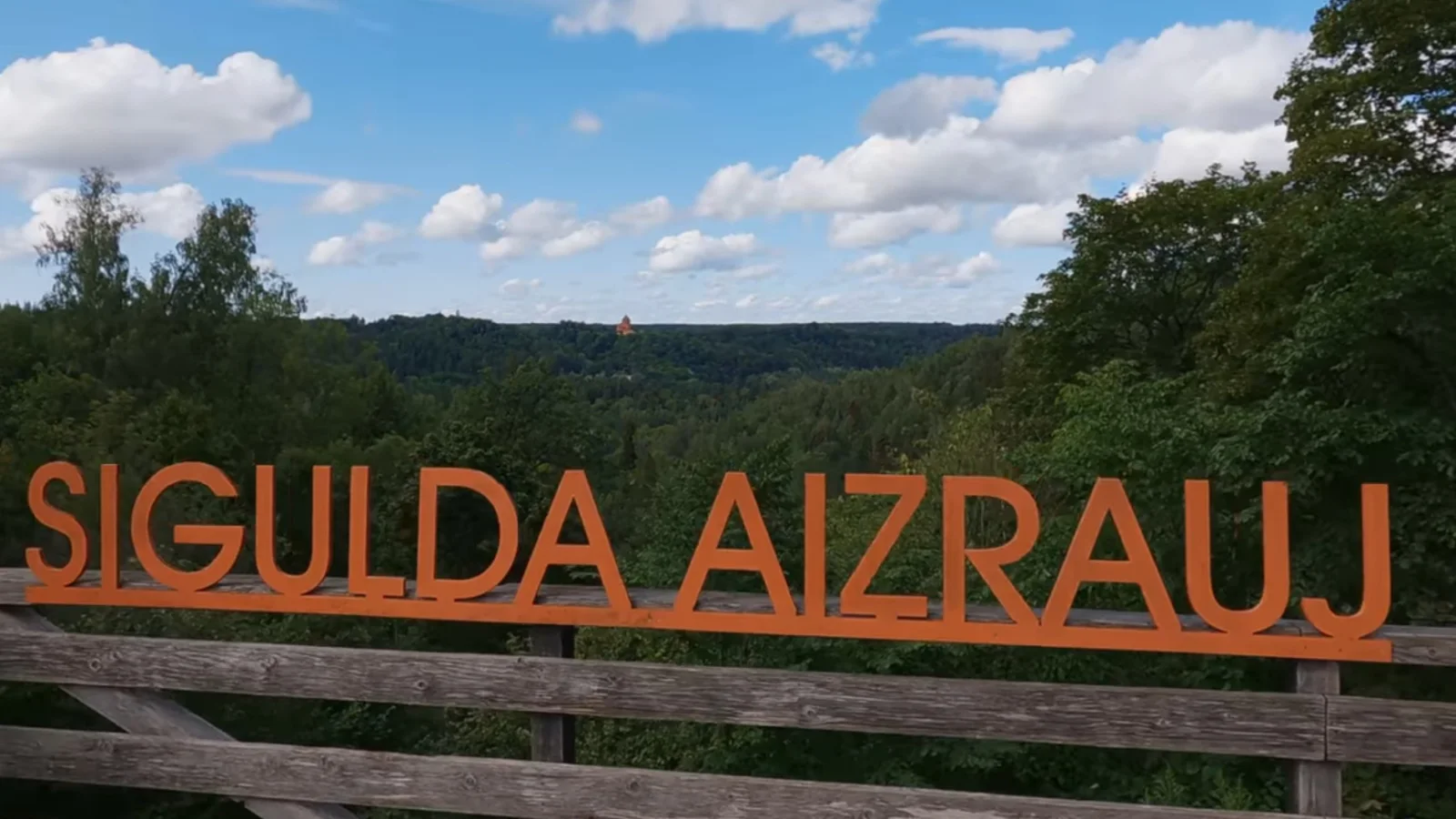
May to June and September suit longer walks. For colour, use late September to mid-October as a window rather than a fixed date.
Open guideLatgale
June through August gives long days for lakes and dispersed sights; early September is quieter but requires tighter daylight planning.
Open guideRoad trips
Late May through September supports longer multi-stop days. Recheck opening hours at every seasonal site and carry a wet-weather alternative.
Open guideSources: Latvian Environment, Geology and Meteorology Centre: monthly climate characterisations , Climate Portal: September in Latvia , Nature Conservation Agency: Gauja National Park , Latvian State Roads: road conditions
Midsummer, public holidays and disruption
23 June, Līgo Eve, and 24 June, Jāņi, are national holidays. They are an excellent reason to visit when a confirmed public event or host arrangement is central to the trip, but they are poor dates for an itinerary that assumes ordinary museum, shop and office hours.
Book rural, coastal and lake accommodation earlier for the Midsummer period. Confirm the last bus or train, the venue programme and food options instead of assuming a normal weekday. In 2026, the state-funded five-day working week also transfers Monday 22 June to Saturday 27 June; private operators can set their own arrangements.
Other dates that deserve an opening-hours check include Easter, 1 and 4 May, 18 November, 24-26 December, 31 December and 1 January. A public holiday does not mean every attraction closes, but it does mean each one needs an exact-date check.
Visit for the celebration
Choose a published event and build the trip around its exact location and finish time.
Open guideAvoid accidental disruption
If Midsummer is not part of the plan, move a transfer or museum-heavy day away from 23-24 June.
Check accommodation pressure
Search the actual dates before finalising a rural route.
Open guideSources: Ministry of Foreign Affairs: Latvian national holidays , State Labour Inspectorate: transferred working days in 2026 , Latvian National Museum of History: opening hours
Autumn colour is a window, not an appointment
For planning purposes, late September to mid-October is the most useful window for autumn colour in Gauja and other wooded landscapes. Temperature, rain, wind and the preceding summer can move the peak or strip leaves quickly, so no date can guarantee the strongest display.
September is the safer month for a walking-led trip because daylight is longer and average temperatures are milder. Early October can deliver stronger colour, but the national October normal includes about 75 mm of precipitation and 12 days with at least 1 mm.
Flexible dates
Prefer a changeable booking and check current park or destination images close to departure.
Flexible route
Keep more than one wooded destination available instead of relying on a single viewpoint.
Wet surfaces
Use footwear suitable for mud and leaf-covered steps, especially after rain.
Sources: Climate Portal: September in Latvia , Latvian Environment, Geology and Meteorology Centre: monthly climate characterisations , Nature Conservation Agency: Gauja National Park
Winter daylight and snow uncertainty
December is Latvia’s darkest month. Official climate normals put daylight at 6-7 hours near the winter solstice and average bright sunshine at only 24 hours for the whole month. The national December average is -1.1 °C, close enough to freezing for snow, sleet, rain, ice and thaw to alternate.
January and February improve the statistical chance of lasting cold and snow, especially inland and at higher eastern locations, but a snow-based itinerary still needs a forecast check shortly before travel. Never treat a lake or river as safe to cross because it looks frozen.
Build a weather-proof day
Pair one outdoor stop with a museum, market, concert or long meal.
Choose the base carefully
Riga offers the widest indoor fallback; inland Latvia generally has the better snow chance.
Check roads and warnings
Use current official road conditions and weather warnings before a winter transfer.
Open guideSources: Climate Portal: December in Latvia , Latvian Environment, Geology and Meteorology Centre: monthly climate characterisations , Latvian State Roads: road conditions
Seasonal closures, events and accommodation pressure
Do not equate “open all year” with identical access in every month. Outdoor areas, towers, gardens, cafés, guided tours and ticket desks can have shorter hours or close seasonally while the main museum remains open.
Rundāle Palace, for example, publishes different museum and French Garden hours by season. Turaida Museum Reserve is open all year but lists longer hours in summer. The Latvian National Museum of History closes on Mondays at Riga Castle and lists specific public-holiday closures. These examples show why the exact attraction page matters more than a general regional guide.
Accommodation pressure is most likely on summer weekends, Midsummer dates and major event periods. It is not uniform across Latvia. Search the real dates before choosing a route, especially when there are few properties near a rural stop.
Check every anchor attraction
Confirm the date, last admission, which buildings are open and whether advance booking is required.
Check the event before the hotel
A major concert or town festival can change availability in one location without affecting the next region.
Open guideKeep shoulder-season days compact
Do not rely on a long chain of outdoor sites when each has limited hours.
Sources: Rundāle Palace Museum: visiting hours , Turaida Museum Reserve: visitor questions , Latvian National Museum of History: opening hours
A practical way to choose your dates
Choose one fixed priority, select the widest month window that supports it, then check daylight, public holidays, anchor-attraction hours and accommodation on the actual dates. Only after that should you lock transport.
1. Fix the priority
Swimming, colour, snow, a festival or a city programme.
2. Compare two candidate months
Use the table above for climate and daylight trade-offs.
3. Check the real dates
Open current forecasts only close to travel, but verify holidays, events and opening hours before booking.
4. Keep one alternative
A museum day, shorter route or different region prevents one wet or cold day from controlling the trip.
Sources: Latvian Environment, Geology and Meteorology Centre: monthly climate characterisations , Ministry of Foreign Affairs: Latvian national holidays , Rundāle Palace Museum: visiting hours , Turaida Museum Reserve: visitor questions
Frequently asked questions
What is the best month for a first trip to Latvia?
May, early June and September offer the best general balance for Riga plus regional travel. Choose July or August instead when swimming is the main priority.
What is Latvia’s warmest month?
July has the highest national 1991-2020 normal, with an average daily minimum of 12.6 °C and maximum of 22.8 °C. Individual days can be much cooler or hotter.
When can you swim in Latvia?
The official monitored bathing season is 15 May to 15 September, but July through late August gives the best chance of comfortable water. Check the live temperature and quality notice for the exact beach.
Is June a good time to visit Latvia?
Yes. June has the longest daylight and suits regional travel, but 23 and 24 June are public holidays. Book and verify transport, accommodation and opening hours around Midsummer.
When are the autumn colours in Latvia?
Use late September to mid-October as a planning window. Weather can shift the timing or remove leaves quickly, so there is no guaranteed peak date.
Is Latvia snowy in December?
Sometimes, but not reliably. The national December average is close to freezing, so snow, rain, sleet, ice and thaw can alternate. January and February offer a better chance, still without a guarantee.
When is best for a Latvia road trip?
Late May through September gives longer daylight and the broadest seasonal access. Avoid assuming normal hours around 23-24 June and check every anchor attraction.
Is September a good time for Riga and Gauja?
Yes. September is one of the strongest combined periods, with milder conditions than late autumn. Daylight falls by more than two hours during the month, so late-September routes need earlier starts.
Sources: Latvian Environment, Geology and Meteorology Centre: monthly climate characterisations , Health Inspectorate: official bathing-water quality , Ministry of Foreign Affairs: Latvian national holidays , Climate Portal: September in Latvia , Climate Portal: December in Latvia
Check the primary information
Official sources and review information
This guide was last reviewed on 27 July 2026. Official Latvian climate normals support the monthly comparisons. Public health, holiday, road and attraction sources support the practical timing advice.
Climate and seasons
Latvian Environment, Geology and Meteorology Centre: monthly climate characterisations
Official 1991-2020 national temperature, precipitation, snow and sunshine normals for every month.
Latvia Open Data Portal: climate standard normals
Official homogenised 1991-2020 climate-standard-normal dataset and field definitions.
Climate Portal: May in Latvia
Official May normals and the temperature difference between Kolka, Riga and inland stations.
Climate Portal: September in Latvia
Official September normals and phenology context for leaf-colour timing.
Climate Portal: December in Latvia
Official December temperature, snow-cover, sunshine and winter-solstice daylight context.
Swimming and visitor safety
Health Inspectorate: official bathing-water quality
Official 15 May to 15 September monitoring period and current bathing-place quality notices.
Health Inspectorate: water and air temperature
Official advice on water warming, cold-water risk and the recommended 16-18 °C minimum range.
Holidays and opening hours
Ministry of Foreign Affairs: Latvian national holidays
Official public-holiday list, including 23 and 24 June and the Christmas holidays.
State Labour Inspectorate: transferred working days in 2026
Official 2026 working-day transfer affecting the Midsummer week in state-funded institutions.
Latvian National Museum of History: opening hours
Current weekly schedules and specific public-holiday closures at museum locations.
Rundāle Palace Museum: visiting hours
Current seasonal differences between palace and French Garden opening hours.
Turaida Museum Reserve: visitor questions
Current all-year access statement and longer summer opening hours.
Routes and conditions
Nature Conservation Agency: Gauja National Park
Official park context for Gauja walking and protected landscapes.
Latvian State Roads: road conditions
Official road-condition and restriction information for seasonal road trips.
Continue exploring